Cart
-
HangerCut sampleSample card
Cut measure
Total


 Cut measure
- Shipping
- VAT
- Total (excl vat)

No products in cart
Quality assurance
As experts in sustainable interior textiles for public spaces, quality is a core issue in our operations. In our internal lab, we have the capability to perform multiple textile tests for both construction and colour fastness to meet market demands. We continuously work to ensure the quality of our products through measures such as random sampling. In our lab, all colour recipes are also developed and later used in production.
We work with the environmental certifications Oeko-Tex and EU Ecolabel –
some of the leading environmental labels that encompass strict environmental and quality requirements.
Thanks to a close collaboration with our designers and product developers, all new products undergo a series of tests before they are launched.
Martindale
Abrasion resistance is a measure of how durable a fabric is. It is one of the most important tests for an upholstery fabric, which generally has to endure a great deal of wear and tear.
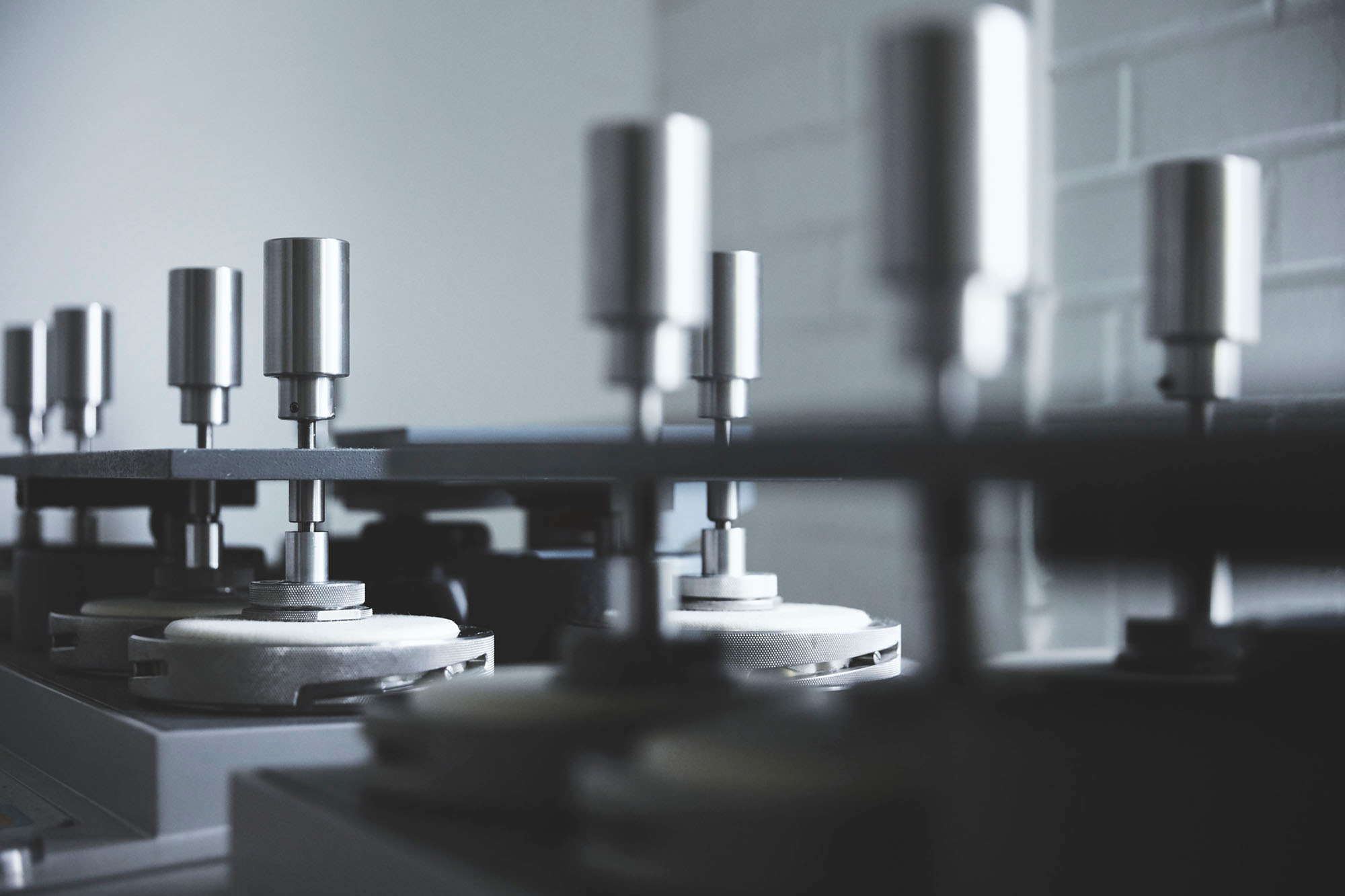
To ensure that our textiles meet the requirements, all our upholstery fabrics are tested according to the standard ISO 12947-2, which is a standard that measures abrasion resistance in a Martindale machine. The method is also known as the "Martindale method".
The textile being tested is worn against a standardised wool fabric in a specific pattern and with a specific pressure. The test continues until two threads have completely broken, at which point the specimen is removed from the machine and the number of cycles is recorded. Three samples from different parts of the material are tested, and the result then stated is the lowest measured of the three samples.
The recommendations for a textile for public environments is a value of at least 40,000 cycles according to Möbelfakta.
Pilling
As with abrasion, pilling is tested using a Martindale machine.
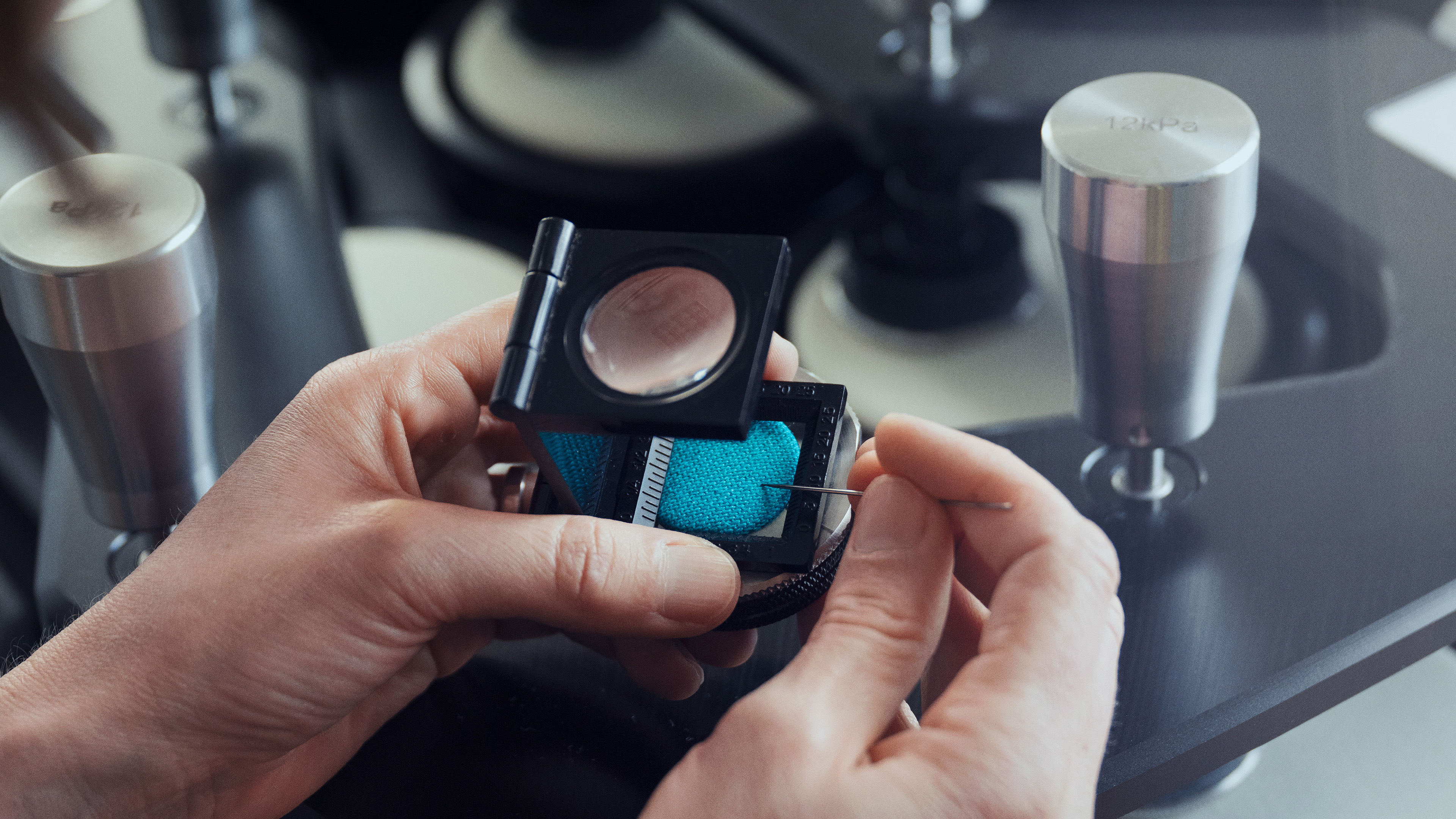
Three samples from the textile are tested simultaneously, but instead of running the samples to threading failure as in abrasion, the machine is stopped at specific intervals - 125, 500, 1000, 2000, 5000, and 7000 cycles. At each stop, the appearance of the samples is assessed against a standardised scale from 1-5, where 5 is the highest rating. To assist in the assessment, there is both a photo scale and a text explanation for each step.
5 - No change
4 - Partially formed pills
3 - Moderate pilling - pills of varying size and density partially covering the specimen surface
2 - Distinct pilling - pills of varying size and density covering a large proportion of the specimen surface.
1 - Severe pilling - pills of varying size and density covering the whole of the specimen surface
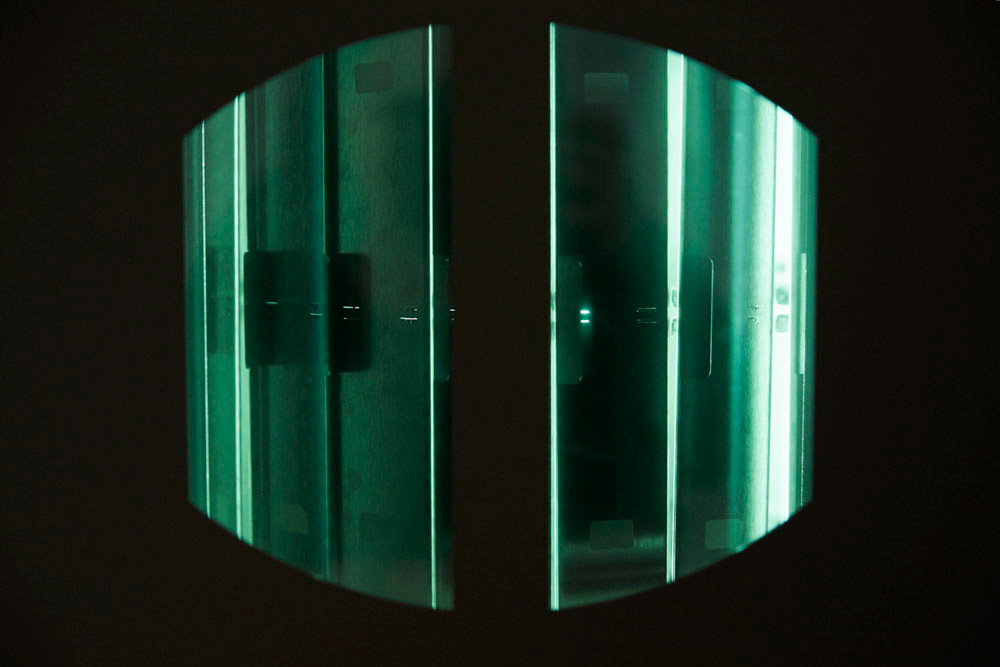
Lightfastness
An important test for both upholstery fabrics and curtain fabrics is light fastness, i.e., how the textile fades from sunlight.
The method we follow is called ISO 105-B02 and is used to determine a material's light fastness by exposing it to a Xenon arc lamp, which should mimic the sun's spectrum. Since indoor textiles are tested, the standard is adapted to resemble the rays through a window glass.
During the test, parts of the textile are covered with a mask to clearly demonstrate how the material fades. The degree of fading is then compared against standardized fabrics, the so-called blue wool scale. The scale consists of 8 blue wool fabrics with different levels of light fastness, where 8 is the highest.
The material being tested is classified between 1-8 depending on which of the blue wool fabrics has the same degree of fading.
Fire tests
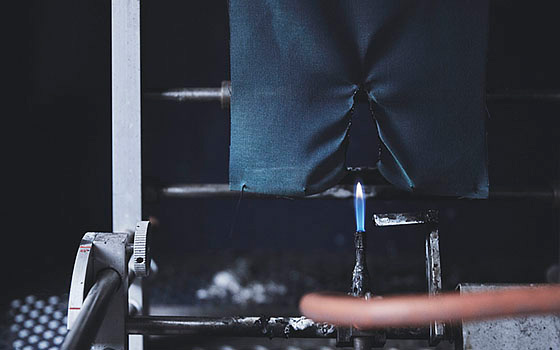
In our internal lab, we have the capability to perform basic fire tests during product development. However, all the products we launch are tested at accredited testing institutes. The fire tests performed on each product depend somewhat on the intended use (upholstery or curtain) and material (Trevira CS or natural materials). All fire tests can be downloaded under each article on our website.
We usually test according to the following fire tests
Hanging fabrics Trevira CS:
DIN 4102, B1
EN 13773, Class 1
NF P 92-503-507, M1
IMO FTP Code 2010: Part 7
BS 5867-2 Type B
Upholstery fabrics Trevira CS:
EN 1021-1&2
DIN 4102-1, B1
IMO FTP Code 2010: Part 8
BS 5852, Crib 5
NF P 92 503-507, M1
Upholstery fabrics wool:
EN 1021-1&2
BS 5852 Crib 5
IMO FTP Code 2010: Part 8