


 Cut measure



Designing sounds
Articles about sound environment
An important factor for well-being is pleasant acoustics. Here we share our collective knowledge and experience together with experts from various industries and fields.

Hanger
Cut sample
Sample card
Cut measure
Total
No products in cart
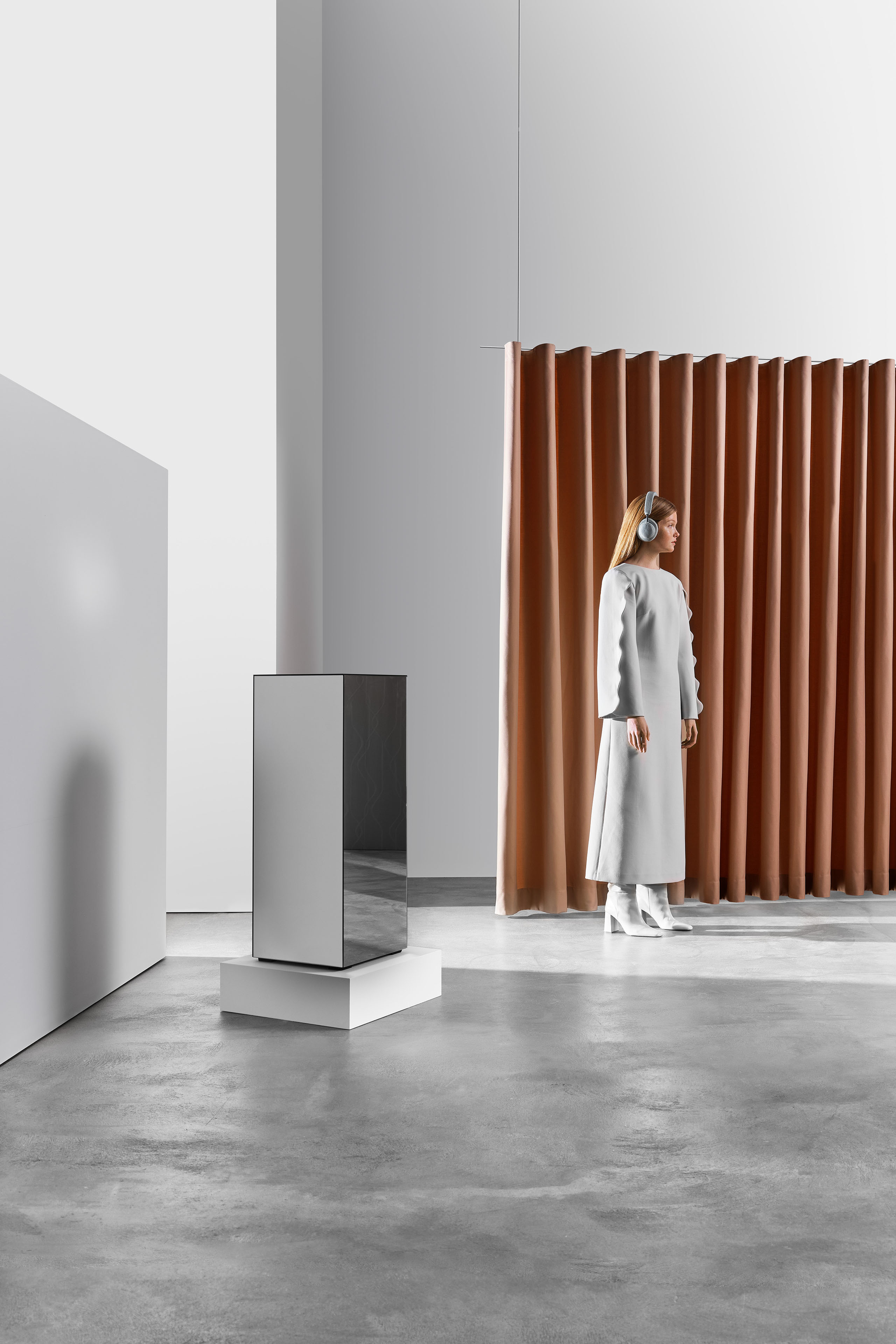
Like other sound absorbers, acoustic textiles are most effective against relatively high-frequency tones. In a workplace, this can involve ventilation systems, electrical hum, and not least, disturbing conversations. For conversations and especially mobile phone calls are among the most disruptive things in a workplace. Our brains are programmed to understand and find a common thread. Considering that we usually only hear one person in a mobile phone call, it becomes difficult to concentrate on anything else.
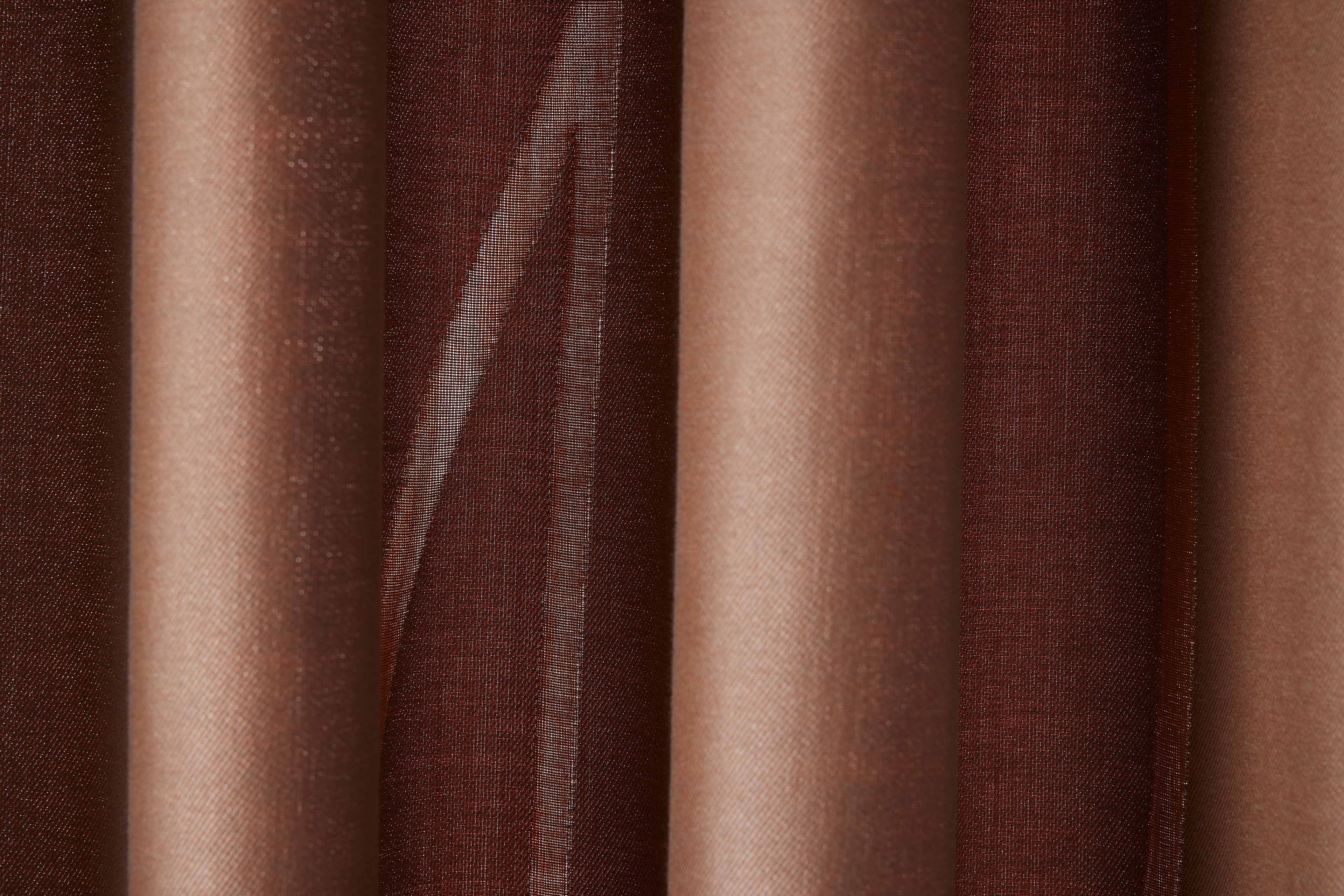
When we test our acoustic fabrics, they are hung both 10 and 15 cm from the wall. It is also in these positions that they absorb the most sound. So hang them 10–15 cm from the wall if you want to maximise soundproofing from your acoustic curtain. Additionally, the curtain dampens more sound the more pleated it is. Also remember that sound bounces between parallel surfaces, such as between the walls or between the floor and the ceiling. So it makes a big difference even if only one of the surfaces has a sound absorber. And remember that a curtain can be used in more places than just in front of a window. It can, for example, hide a dull plaster wall with poor sound properties or be used as a flexible wall to create a room within a room.
Cost-effective
Multifunctional
Becomes part of the interior rather than a necessary evil
Easy to place (and move)
Does not require expensive installation
Effective in high frequency ranges
Covers large areas and thus absorbs a lot of sound
Flexible as they can be drawn in and out
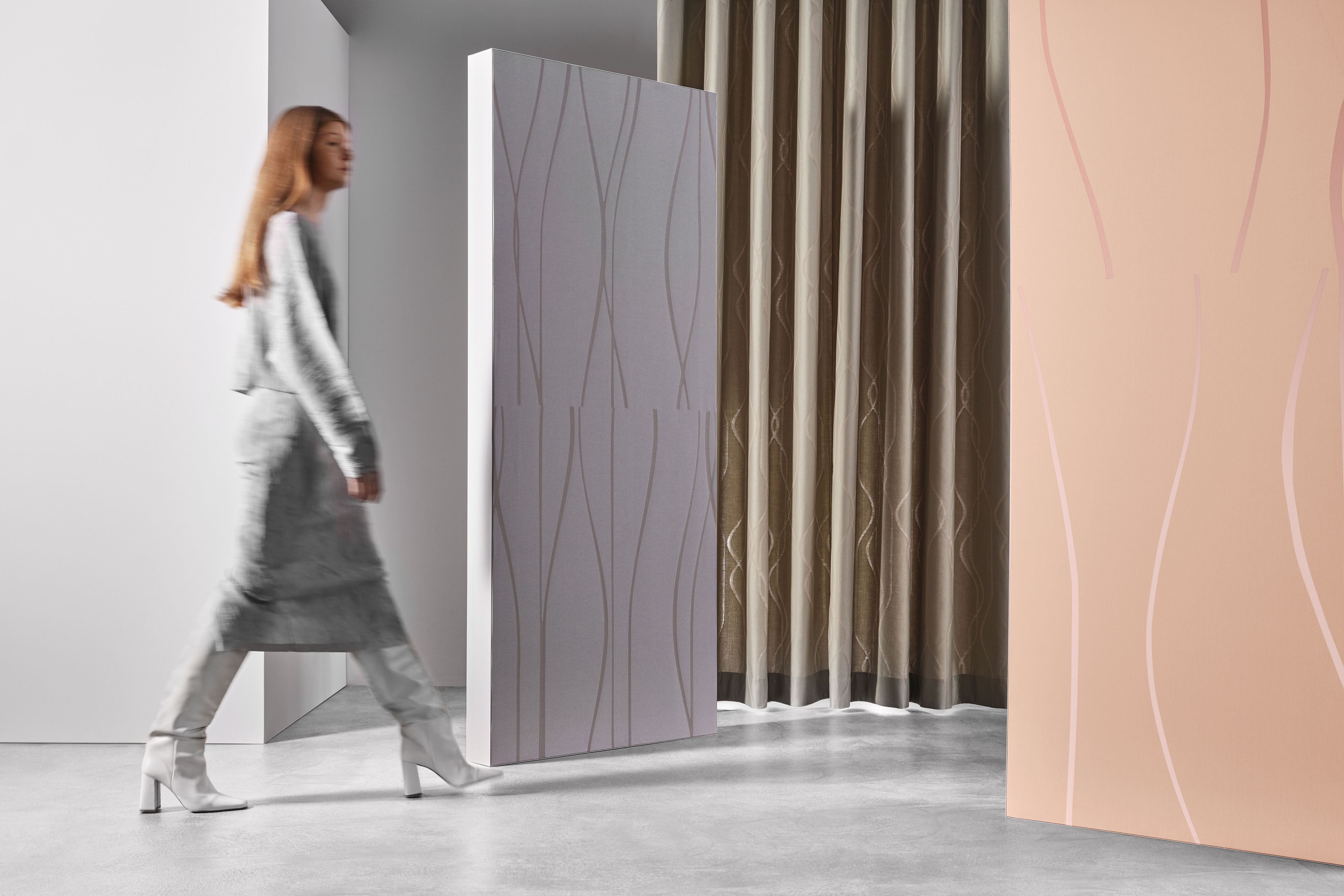
Good air, good light, and good ergonomics have long been standard at workplaces, and rightly so. However, good sound conditions are also important because noise can affect us very negatively. It can damage our hearing even at low sound levels if it continues over a long period. And even if the noise isn't directly harmful, it can affect us indirectly in many ways.
A noisy, or reverberant environment where the room sound is "live", boomy or echoey, causes unnecessary stress. In turn, that can lead to both physical and mental issues. Noise makes it harder to have a normal conversation. This causes us to raise our voices, resulting in a higher sound level. Noise also affects our attention. We have more difficulty concentrating, which worsens our work performance.
Studies show this kind of live or reverberant environment is the factor most likely to lead to dissatisfaction and poorer health. One study focused on teachers. It found that those working in environments with so-called "long reverberation" are six times more likely to change jobs. They have lower motivation and become more tired. Additionally, they perceive the classroom climate as less relaxed and more aggressive.
With sound-absorbing textiles, the reverberation decreases, meaning the brain doesn't have to process as much of that irritating noise which carries no informational value. This way, we have greater capacity to remember, solve problems, and process valuable information. In other words, good acoustics are a sound investment – both for our health and from a business perspective.
Designing sounds
An important factor for well-being is pleasant acoustics. Here we share our collective knowledge and experience together with experts from various industries and fields.
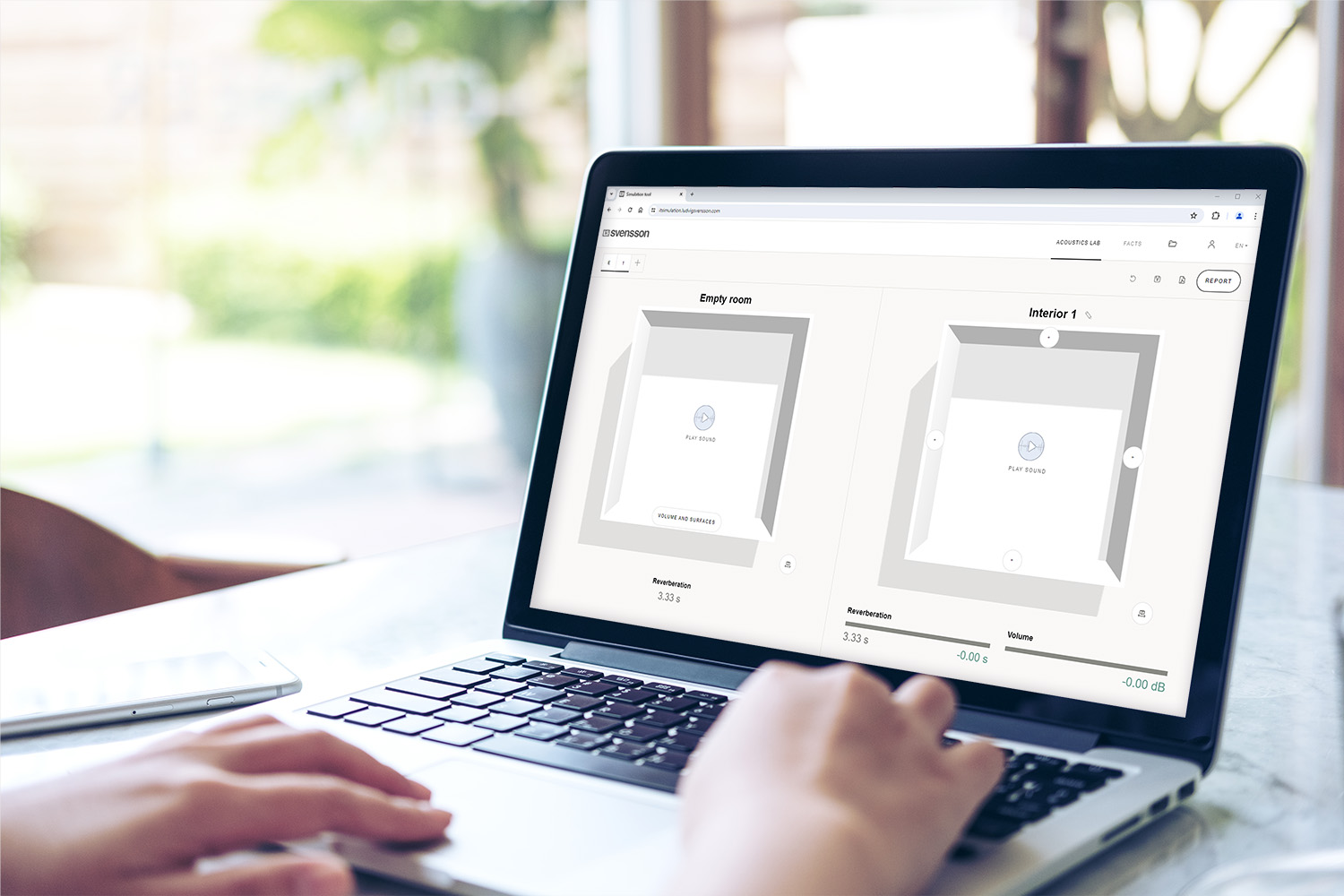
Designing sounds
We offer an acoustics tool, an acoustics guide, a functional room that you are welcome to visit, and inspiration on how you can create pleasant spaces using form and function.
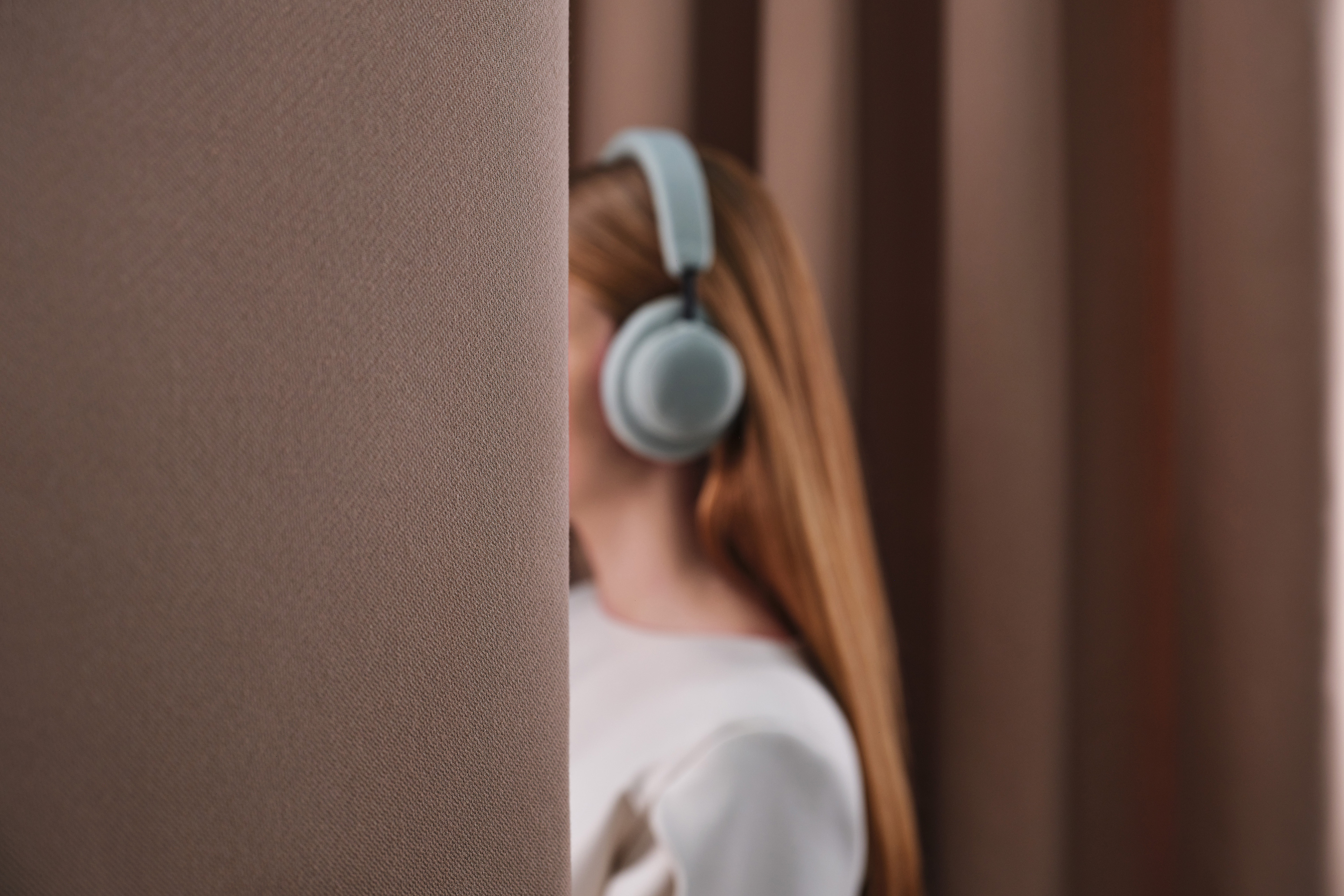
Designing sounds
Sound-rated textiles from Svensson are available in absorption classes A-C. With the right textile in the right place, you can create a pleasant sound environment.
