

Lower cooling costs
Reduces incoming radiation at the right moments, lowering the load on cooling systems.

PARperfect Cooling is a dual-screen shading solution designed to reduce cooling demand in semi-closed greenhouses operating in warm climates. The system uses two screens working together to control incoming radiation more precisely, limiting excess heat buildup while still delivering usable light to the crop. By reducing radiation load at the right moments, PARperfect Cooling lowers the need for high fan speeds and intensive cooling, resulting in a more even greenhouse climate and healthier plants. Screen strategies are supported by expert advisory to ensure light, temperature, and cooling systems work together as efficiently as possible.
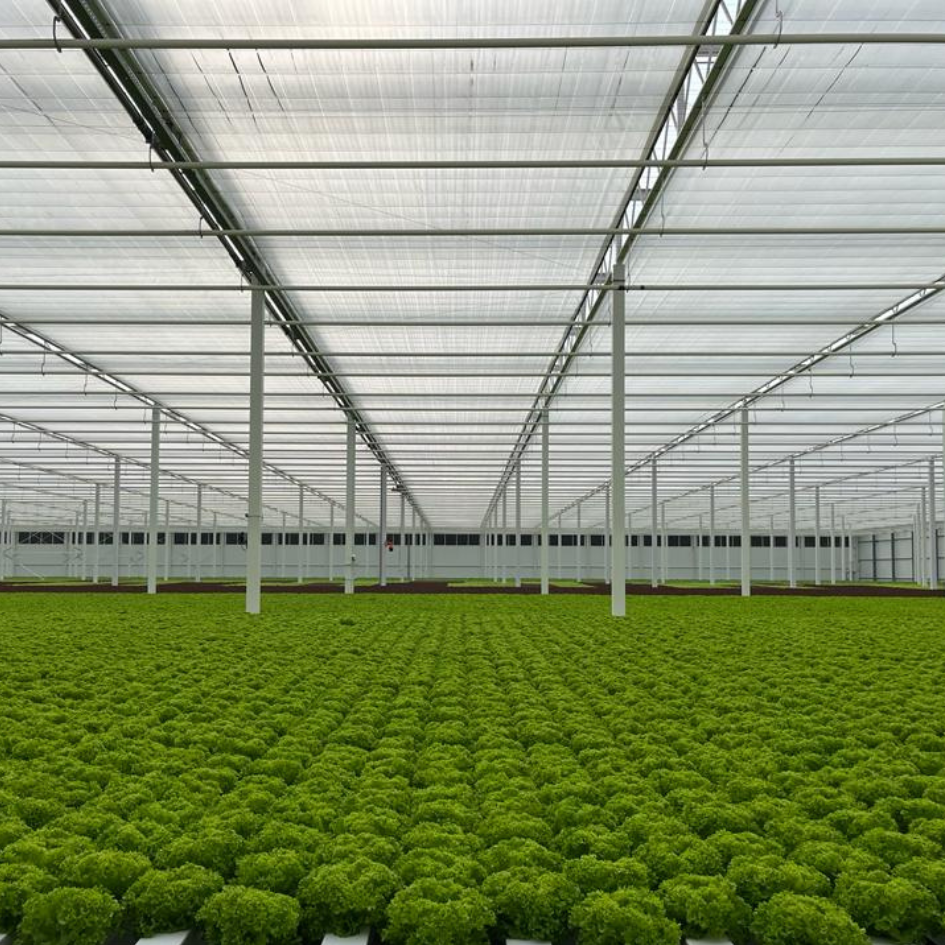
Reduces incoming radiation at the right moments, lowering the load on cooling systems.

Creates steadier light and temperature conditions across the greenhouse and crop.

Limits the need for high cooling fan speeds while maintaining effective climate control.

Guidance that helps fine-tune screen use so cooling, light, and crop needs stay aligned.
PARperfect Cooling uses a dual-screen strategy to control incoming radiation before it turns into excess heat. By combining two climate screens that work together, the system adjusts shading dynamically throughout the day to limit peak radiation while still allowing usable light to reach the crop.
This targeted light control reduces heat buildup inside the greenhouse, which lowers the demand on cooling systems and allows fans to run at lower speeds. The result is a more stable climate with less temperature fluctuation, improved crop comfort, and reduced cooling energy use. Screen settings and timing are supported by expert advisory to ensure the system performs effectively under changing conditions.

Contact our team to see how PARperfect Cooling can help you capture more heat at night, improve plant temperature, and fine-tune your double screen strategy with expert guidance.
PARperfect Cooling is an advanced version of the PARperfect system, designed for warm climates or greenhouses that rely on active cooling. It uses the same principle — two coordinated screens — but focuses on keeping both light and temperature exactly where they should be.
Because light and heat come from the same source. If shading control is imprecise, cooling systems have to work harder. With PARperfect Cooling, the shading reacts instantly to light and temperature data, reducing peaks before they become load on your cooling equipment.
By stabilizing the incoming radiation, cooling systems can run at lower capacity and for shorter periods. Each small improvement in screen precision translates directly into reduced fan, pad or compressor use — often cutting energy costs without compromising crop conditions.
No — it complements it. The system keeps radiation and temperature steadier, so active cooling doesn’t have to chase fluctuations. Many growers report lower average fan speeds and more predictable temperature control.
Yes. If you already run PARperfect, adding temperature feedback is a logical next step. The same screens and drives can often be used; only the control strategy and sensors are upgraded.
It combines light sensors (for PAR) with temperature and sometimes humidity sensors. The control algorithm uses these to maintain a stable climate profile — balancing energy input, shading, and cooling response in real time.
Results vary with climate and setup, but even a few percent less cooling time or lower compressor load can have a large impact. The bigger benefit is long-term: steadier plant growth and reduced stress from sudden heat spikes.
No. Any actively cooled greenhouse — whether using fans and pads, evaporative cooling, or mechanical refrigeration — can gain from more precise shading. It’s about control logic, not hardware complexity.
Consistency. The crop sees fewer light and temperature swings, the climate computer works less aggressively, and energy consumption drops. Cooling becomes predictable rather than reactive.
